Food Industry
Top 7 Food Review Websites in 2026: Where Foodies, Diners & Restaurants Connect
⏱️ 7 min read•January 15, 2026
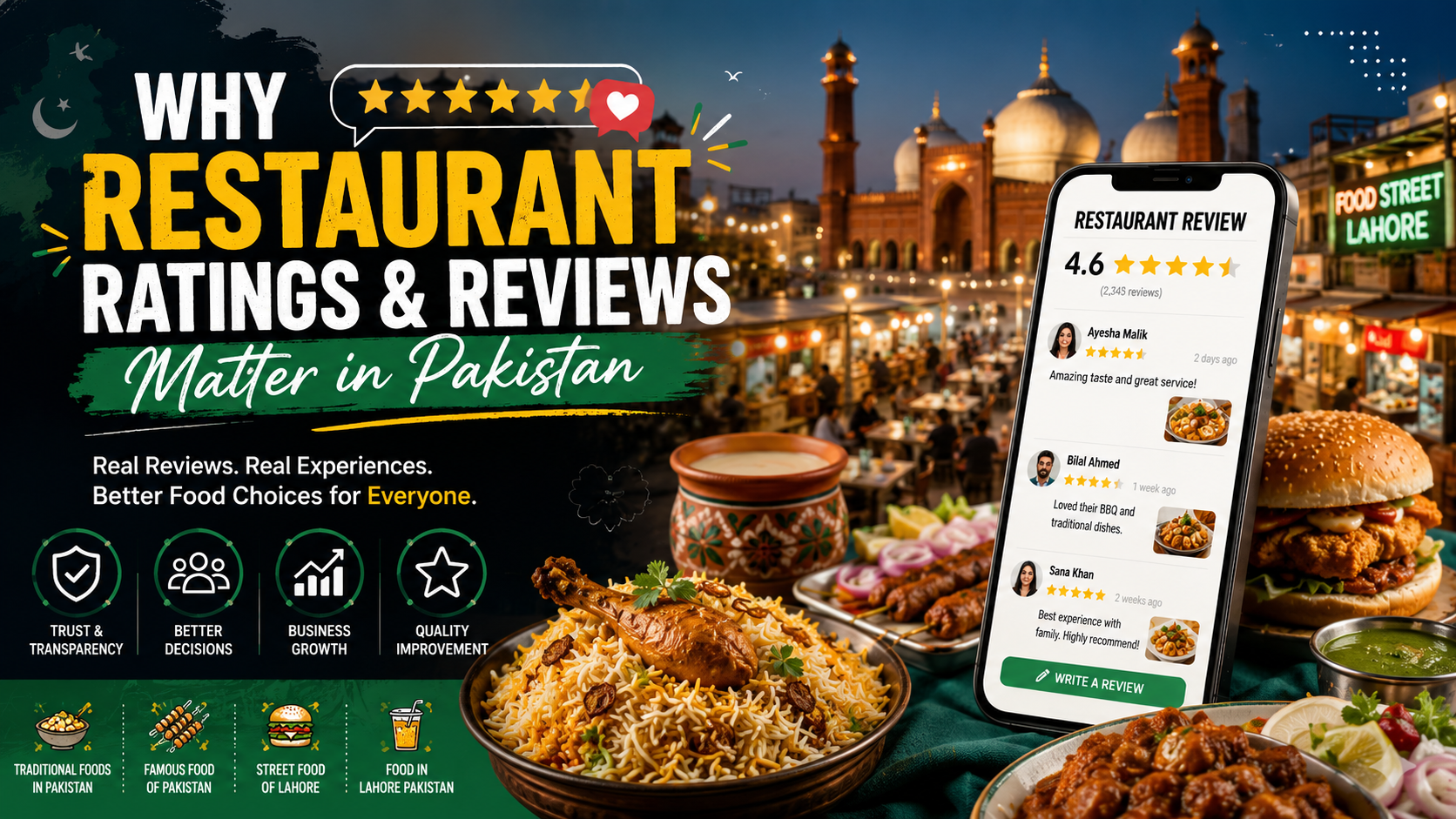
Read More →Before visiting a restaurant, most people open Google Maps, share screenshots in WhatsApp groups, or ask in local Facebook foodie communities. This informal review culture already exists — but when someone documents their experience in a structured, honest way, it becomes far more valuable. Delivery reviews work differently too: packaging quality, temperature on arrival, and order accuracy matter just as much as taste when ordering online.
Let me tell you something that happened to me recently. I was standing outside a karahi place in Gulberg, Lahore — one my colleague had been raving about for weeks. It was a Saturday night, the street was loud, the smell coming from inside was genuinely incredible. But before I walked in, I did what every Pakistani does now: I pulled out my phone and searched for a food review.
What I found was two reviews. One said "best karahi in Lahore, must visit." The other said "overpriced, portion size small." That was it. No price mentioned, no context, no information about whether either person actually knew what a good karahi should taste like.
I went in anyway. The karahi was outstanding. But it got me thinking — how many people saw those two useless reviews and drove past?That's what this guide is about. Whether you're someone who wants to write better food reviews, someone who reads them before deciding where to eat, or a restaurant owner who wants to understand why reviews matter — this is the most complete, Pakistan-specific food review guide you'll find in 2026.
A food review is exactly what it sounds like a written account of someone's dining experience. But in Pakistan in 2026, it's become something far more significant than that.
Think about how you decide where to eat. You ask a friend. You check Google Maps. Maybe you search on Rabaat, WhatsApp a family group, or scroll through someone's Instagram. All of that is food review culture informal, scattered, and sometimes completely unreliable. The moment someone documents their dining experience in a structured, honest way, it becomes genuinely useful information for the thousands of people making the same decision every single day.
Pakistan's restaurant industry has exploded over the last decade. Lahore alone has gone from a handful of known dining spots to hundreds of new restaurants opening every year — from street food stalls in Anarkali to fine dining in DHA. Karachi's food scene stretches from Burns Road's legendary nihari houses to the modern café strips of Clifton and PECHS. Islamabad has transformed from a quiet government city into one of the most vibrant food destinations in the country.
With that growth comes a problem. How do you know which places are actually worth your time and money? How do you avoid paying Rs. 3,000 per head for a dining experience that doesn't justify it? How do you find that karahi house in a Gawalmandi side street that has no sign and no social media presence but has been serving the same recipe for forty years?
Food reviews, when they're written properly, solve all of those problems. They document the food quality, service rating, hygiene standards, ambience and atmosphere, menu variety, and value for money in one place — so the next person doesn't have to guess.
This part is important, and most guides skip it entirely. Understanding how people actually use food reviews in Pakistan tells you a lot about what a good food review should contain.
Someone is planning dinner. They open Google Maps, type "karahi restaurant near me" or "best biryani in Karachi," and scroll through the results. They click on two or three listings, read a few reviews, look at photos, and decide. This whole process takes about three minutes. Your review needs to answer the key question — is this place worth going to — within the first few sentences.
A family or group of friends is deciding where to go. Someone shares a link or a screenshot of a restaurant. The group reads reviews together, sometimes out loud. These reviews need to be specific enough to settle arguments — is it family-friendly? Is the portion size worth the price? Is parking available?
Someone in Lahore or Karachi is ordering food online. They read the ratings on Foodpanda or check Google reviews to figure out if the restaurant's delivery quality matches their dine-in reputation. These are different evaluations — packaging, temperature on arrival, and order accuracy matter as much as taste.
Someone had a great or terrible experience and wants to know if others felt the same way. They search for reviews not to decide whether to go, but to understand whether what they experienced was normal or an exception.
Understanding these four use cases changes how you write. A review that helps with the pre-visit search needs to be specific about food quality and price. A review that helps a group decision needs to cover atmosphere and family-friendliness. A delivery review needs to address packaging and accuracy. A validation review needs to be honest about what went right or wrong.
Most people see the stars and move on. But understanding how restaurant ratings actually work — and what they mean in a Pakistani context — will make you both a better reviewer and a smarter consumer of reviews.
The standard five-star rating used across Google Maps, Rabaat, and most food platforms means the same thing everywhere, but what earns each rating looks different in Pakistan.
Five stars should mean genuinely exceptional — the kind of experience that moves you to tell five people about it the next day. In Pakistan, this usually means food that tasted exactly the way it was supposed to, service that was attentive without being intrusive, a clean and comfortable environment, and a price that felt justified or better. In Lahore's competitive food culture, a five-star experience is genuinely rare. In Islamabad, where the dining scene is still maturing, the bar is slightly different.
Four stars means excellent with one or two rough edges. The karahi was outstanding but you waited 40 minutes. The café had incredible coffee but the seating was too cramped. This is honestly where most good restaurants in Pakistan should land — because perfection is rare and four stars from a discerning reviewer means something real.
Three stars means it was fine. You ate, you left, nothing disappointed you badly and nothing delighted you. Worth knowing about, worth being accurate about. Three stars from an honest reviewer is useful information.
Two stars means something went genuinely wrong. Cold food. Poor hygiene. A waiter who made you feel unwelcome. An order that bore no resemblance to what you received. This is not a harsh rating — it's an accurate one.
One star is reserved for experiences where you would actively warn someone away. Hygiene concerns are serious enough to matter. Food that made someone sick. Treatment that was genuinely disrespectful. One star is not for minor inconveniences.
The star rating on its own tells you almost nothing. What transforms a restaurant rating into useful information is the sub-rating breakdown.
A restaurant might have 4.1 stars overall but a food quality score of 4.8 and a service score of 2.3. That combination tells you something specific and actionable: go for the food, lower your service expectations, and maybe don't go on a busy Friday night when the gap between food quality and service quality will be at its most pronounced.
The best food review platforms in Pakistan allow sub-ratings across food quality, service rating, hygiene standards, value for money, and ambience. When you're reading reviews to decide where to eat, look at the sub-ratings before the overall score. When you're writing a review, fill in every sub-rating honestly — that breakdown is often more useful than the number above it.
A restaurant with 4.7 stars from 12 reviews means something very different from a restaurant with 4.3 stars from 847 reviews. Volume matters. In Pakistan's review ecosystem, many restaurants have very few reviews, which means a single bad review can unfairly drag down a rating, and a single planted five-star review can inflate it.
When you see fewer than 20 reviews on a listing, read every single one rather than relying on the average. When you see hundreds of reviews, the average becomes statistically meaningful — but look at the trend over time, because a restaurant that was excellent eighteen months ago may not be excellent today.
Right. This is the part that actually changes things. Writing a useful food review is a skill, and like any skill, it has learnable components.
The most common mistake I see in Pakistani food reviews is jumping straight into the dish. Before you describe what you ate, tell your reader who you are at this moment: when did you visit, who were you with, and what brought you there?
This context is not padding — it's genuinely useful information. A restaurant that handles a packed Saturday night well is a different beast from the same restaurant on a quiet Tuesday afternoon. A family with young children evaluates a dining experience differently from two colleagues having a quick working lunch.
Here's what a good opener looks like:
"Went on a Friday evening with my wife and her parents — four adults, no kids. It was the first time her parents had visited this area of Lahore, so there was a bit of pressure to pick somewhere reliable. We arrived at 8:30pm and waited about fifteen minutes for a table, which was fine given the crowd. The restaurant was loud but not unpleasantly so."
That opener — in six lines — tells the reader the timing, the group composition, the occasion context, the wait time, and the noise level. Five pieces of genuinely useful information before the food is even mentioned.
The golden rule: describe food the way you would explain it to someone you actually care about, not the way you would fill in a form.
"Delicious" tells no one anything. "Amazing" is noise. "Best karahi I've ever had" might be true but it gives no one any information to act on.
What your reader needs is the taste profile, the texture, the technique, and what made it work or not work.
This is a weak food review: "Had the mutton karahi. It was really good. The gravy was tasty and the meat was tender. I will definitely come back."
This is a food review that actually helps someone: "The mutton karahi came in a proper iron karahi — you could see the char marks and the oil pooling at the edges the way it should. Gravy thick and properly reduced, tomato-forward with fresh ginger coming through clearly in each bite. The green chillies were added at the end rather than cooked in, which kept the heat separate from the flavour. Gosht was fall-off-the-bone tender without being mushy — that specific texture that tells you it was cooked slowly and not rushed. For Rs. 2,800 for a medium between two people, this is exactly what this city needs more of."
The second one covers technique, flavour profile, texture, spice approach, and price — in five sentences. That's the standard to aim for.
Vocabulary that earns its place in a food review: fall-off-the-bone, slow-cooked, charcoal-grilled, hand-ground masala, deeply aromatic, melt-in-your-mouth, tomato-forward, properly reduced, tandoor-fresh, umami-rich, well-rested meat, generous portion size, fresh-to-order, robust spice profile.
Service evaluation is the most consistently skipped section of Pakistani food reviews. This is a mistake.
The dining experience is never just the food. A meal where you waited 50 minutes without explanation, where no one refilled your water, or where the waiter made you feel like you were inconveniencing him by ordering — that is part of the experience, and your reader deserves to know about it.
You do not need to be cruel. Be specific and be fair.
"Staff was clearly stretched on a Saturday night — we counted three servers handling what looked like thirty tables. Nobody came to check on us between the food arriving and the bill being called, which we only noticed because we needed extra naan. When we flagged someone down, the response was immediate and friendly. The underlying attitude is right; the staffing formula isn't."
That is a fair, specific, useful service evaluation. It gives the restaurant something actionable and gives the reader something accurate.
In Pakistan, food hygiene is a deeply important consideration — more important than most Western food review guides acknowledge. Pakistani diners look at tables, restrooms, kitchen visibility, food handling, and whether the space feels actively maintained. These observations belong in a food review.
Ambience deserves specificity too. Not "nice atmosphere" — but what kind of atmosphere, and for whom. Is it loud enough that a conversation requires raising your voice? Is the lighting low enough that the food is hard to see? Is there a family section? Are there enough chairs for large groups? Is the parking manageable?
"The place was clean — tables properly wiped, restrooms functional and not neglected, kitchen visible from the seating area and looking organised. AC was working hard against the July heat. Seating is mixed — some booths that work for families, some open tables that felt exposed for a more private meal. The noise level is high but not uncomfortable, the kind of background sound that fills the room without killing conversation."
"Affordable" means Rs. 500 to one person and Rs. 2,500 to another. "Expensive" is equally meaningless without a number. Your reader needs to know what they will spend, what they will get for that, and whether it represents honest value for money.
"Four people, full spread — two karahis (one mutton, one chicken), eight naan, four cold drinks, two plates of daal fry — came to Rs. 5,600. No hidden charges, no service tax on top. For the portion size and the quality, this is genuinely fair. You would pay more at a similar standard in DHA and get less."
Price, what was ordered, total, and context. That is value for money information your reader can actually use.
The most practical thing a food review can do is answer one simple question: what should I actually order when I get there?
Do not make your reader guess. Name the specific dishes that were exceptional. And if something disappointed — kindly but clearly — name that too.
"The mutton karahi is the reason to go. Order it. The seekh kebab starter was underwhelming — dry and under-seasoned, felt pre-made rather than fresh. Skip it. The naan was good: properly soft with a slight char, clearly from the tandoor and not reheated. The kheer surprised me — not too sweet, real cardamom, clearly made that day. Worth ordering."
End your review by telling the reader who should go, who maybe should not, and whether you would return. Be direct.
"If you are in Lahore and looking for a reliable, authentic dining experience with no pretension and a karahi that actually tastes like a karahi — go. Best suited for families and groups. Not a great spot for a quiet one-on-one dinner because of the noise. I'll be back before the month is out."
Understanding the principles is one thing. Seeing them applied to Pakistan's actual food culture is another.
Sunday morning, halwa puri. Got here at 8:15am — there was already a queue, which is always a good sign. Two people, Rs. 560 total.
The puri was textbook: puffed completely, golden without being oily, crisp on the outside and soft inside. Halwa was the right side of sweet — not the sugar-dumped version you get at wedding catering, but properly flavoured with cardamom and a little saffron. Chana had good tang and heat, the kind that builds slowly. Everything arrived piping hot.
The place is packed, loud, and tables turn over fast. No lingering over chai here — this is a working dhaba and the rhythm shows. Hygiene was fine: surfaces clean, fresh oil visible, nothing that gave pause. This is the kind of place that doesn't need a sign because its reputation is the sign. Go before 9am or expect a wait.
Saturday evening, four adults and two children under eight. Booked in advance — good decision, because the restaurant was at capacity by 8pm.
We ordered the mutton karahi, mixed grill platter, and extra naan. The karahi was the clear standout — iron vessel, proper char on the gosht, gravy thick and well-reduced with that tomato-forward Lahori style I prefer over the oilier Peshawari version. Meat fall-off-the-bone without losing structure. The mixed grill was inconsistent: seekh kebab was excellent, smoky and properly seasoned, but the chicken tikka was dry and under-marinated. Skip the tikka; order extra seekh.
Service was stretched — clearly understaffed for a Saturday rush — but remained polite throughout. Food arrived in about 25 minutes, which was reasonable. The space handles families well: booth seating, enough room for kids to be kids without disturbing other tables, clean restrooms.
Six people, full meal with drinks: Rs. 7,800. Generous portions — we brought food home. Worth it for a family dinner. I'll be back.
Midweek afternoon, working alone for about two hours. Ordered an Americano and a croissant.
The coffee was properly made — you could tell from the colour and the crema that someone behind that counter knew what they were doing. Not bitter, not watery, served at the right temperature without being scalded. The croissant was actually fresh: layers visible, properly buttered, not that sad limp thing most cafés in this city serve. Rs. 650 for both, which is reasonable for F-7.
The space works for solo work: good ambient noise level that drowns out the street but doesn't compete with your thoughts, comfortable seating, sockets available at most tables. No one came to hover or suggest I should free the table. Came back the following week. This is my Islamabad default now.
Weekend dinner, two people, reservation made three days in advance. DHA Phase 5.
We went with the five-course chef's tasting. The standout was the lamb rack: French cut, properly rested, served with a reduction that had clearly been working for a long time. The texture and the depth of flavour in that reduction alone justified the evening. The prawn starter was fresh but slightly overseasoned — noticeable at this price point where every course needs to be exactly right. The dessert was excellent: a deconstructed kheer that took a dish I've eaten my whole life and made me look at it differently.
Service elevated everything. Dishes explained naturally without the stiff rehearsed quality that makes fine dining feel like theatre. Courses paced well — never rushed, never long enough to lose the momentum of the meal. Water attended to throughout.
Two people, five courses, two soft drinks: Rs. 12,400. It's expensive. For Karachi's fine dining scene in 2026, it's also fair. The food quality, the service, and the environment together justify the number. Couples celebrating something, small groups who want proof that Pakistani fine dining has genuinely arrived — this is where to go.
This is a question Pakistani diners ask a lot, and the honest answer is that different platforms serve different purposes. Here's how the major options compare.
The most widely used platform for food reviews in Pakistan by a significant margin. Almost every restaurant has a Google listing, and most people check it before visiting somewhere new. The review system is familiar, the integration with navigation is seamless, and the photo system gives you a real sense of what you're walking into.
The limitation is that Google Maps wasn't built for food reviews — it was built for navigation and local business discovery. The review structure is minimal, there's no sub-rating system for Pakistani food culture, and the reviews range from genuinely useful paragraphs to "good" with three stars and nothing else.
Best for: quick pre-visit checks, navigation, comparing overall ratings across multiple places.
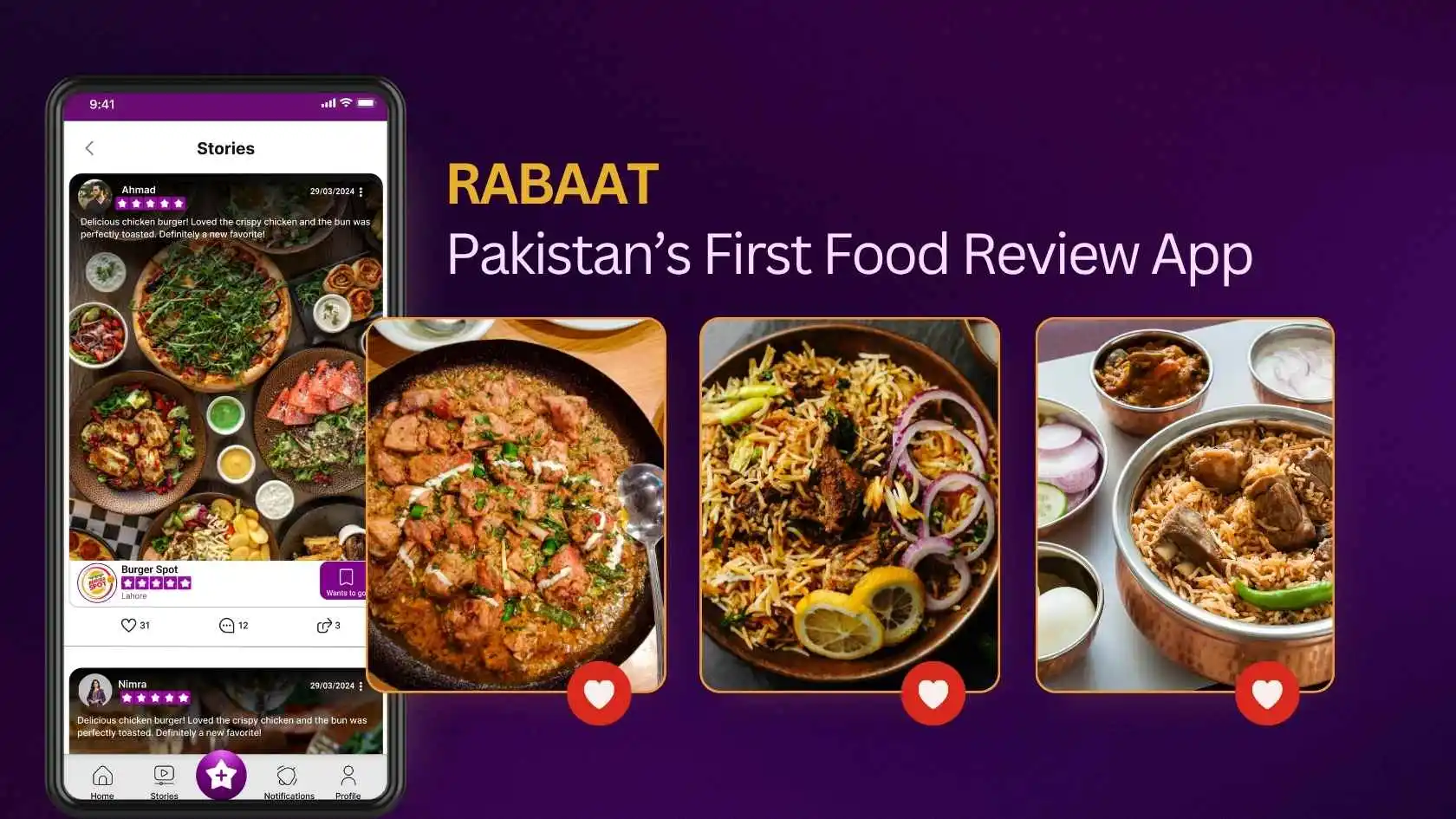
Rabaat is built specifically for Pakistani food reviews, which is what makes it genuinely different from the other options. The platform is structured around how Pakistani diners actually think about their dining experience — with sub-ratings for food quality, service, hygiene, and value for money, city-based filtering by area (not just city), and a review format that guides you through the elements that matter.
The community on Rabaat is Pakistani diners writing for Pakistani diners — which means the context, the price expectations, and the cultural references are all calibrated correctly. A review on Rabaat that says "classic Lahori karahi" means something specific, because the writer and reader share the same reference point.
If you're writing serious food reviews in Pakistan or reading them before a dining decision, Rabaat is the platform that takes local food culture seriously. You can explore food reviews in Pakistan across all major cities, and if you're a restaurant owner, listing your restaurant and completing your profile makes your business discoverable to people actively searching for their next meal.
Best for: detailed Pakistani food reviews, city and area-specific searches, sub-rating breakdowns.
Foodpanda is primarily a delivery platform, not a review platform — and it's important to understand the difference. The ratings on Foodpanda reflect delivery experience: packaging, temperature on arrival, order accuracy, delivery time. They are not a reliable indicator of dine-in food quality.
A restaurant that makes excellent karahi might have poor Foodpanda ratings because their karahi doesn't travel well in a delivery container. Conversely, a restaurant with strong Foodpanda ratings might offer a mediocre dine-in experience. Use Foodpanda reviews for delivery decisions only.
Best for: delivery-specific decisions, comparing delivery speed and order accuracy.
Useful primarily if you're looking for tourist-oriented restaurants or hotels with dining attached. For everyday Pakistani food culture — the dhaba, the karahi house, the neighbourhood biryani joint — TripAdvisor's coverage is thin and the review base skews toward foreign visitors whose reference points are different from local diners.
Best for: tourist-facing restaurants, hotel dining, international chains.
This is the most underrated food review ecosystem in Pakistan. Local Facebook groups — city-specific foodie communities — often have more useful, honest, and contextually appropriate information than any formal review platform. "Has anyone tried the new place on MM Alam Road?" will get you ten genuine responses from real people within an hour.
The limitation is that this information is ephemeral, unsearchable, and hard to aggregate. A platform review stays accessible; a WhatsApp conversation doesn't.
Best for: real-time local recommendations, community trust, emerging restaurants that haven't built a review base yet.
I've read thousands of Pakistani food reviews across every platform. The same mistakes appear again and again. Avoiding these puts your review immediately in the top tier.
If you own or manage a restaurant in Pakistan and you're reading this: the reviews being written about your business, even the critical ones, maybe especially the critical ones — are the most valuable feedback you will ever receive.
Think about what it costs to commission a customer survey or hire a consultant to evaluate your operations. Now think about the fact that your customers are doing this for free, publicly, and in real time. A review that says your food hygiene standards slip during peak weekend hours is information your kitchen manager needs. A consistent pattern of reviews mentioning cold food is a logistics problem your operations team needs to solve. A reviewer who says your staff made them feel unwelcome is telling you something about your team culture that no internal audit will reveal.
The restaurants in Pakistan that are growing fastest in 2026 are not necessarily the ones with the best food. They are the ones that take customer feedback seriously, respond to reviews publicly, and make visible changes based on what their customers are telling them. Responding to a negative review professionally, specifically, and with genuine acknowledgment builds more trust than ten positive reviews.
If you want to manage your online reputation properly, listing your restaurant on a dedicated platform and setting up your full profile gives you the tools to track your ratings over time, respond to individual reviews, and understand what your customers actually think versus what you think they think. That gap, when you close it, is where businesses improve.
Before submitting, run through this quickly:
A food review is a written account of a dining experience that covers food quality, service, atmosphere, hygiene, and value for money. A good food review is specific enough that a reader can make a genuine decision based on it not just whether to go, but what to order when they get there.
Start with context: when did you visit, who were you with, what was the situation? Then describe the food specifically: taste profile, texture, technique, presentation. Cover the service honestly. Mention the price in actual rupees. Name what to order and what to skip. End with a clear verdict. See the step-by-step section above for a full breakdown.
For detailed, Pakistani-specific reviews: Rabaat. For quick pre-visit checks and navigation: Google Maps. For delivery-specific ratings: Foodpanda. For tourist-facing restaurants: TripAdvisor. For real-time local recommendations: Facebook foodie groups. The best food review websites for 2026 comparison post covers these platforms in detail.
Most platforms use a 1-5 star rating, where 5 means exceptional and 1 means you would actively warn others away. The overall star rating is most useful when accompanied by sub-ratings for food, service, hygiene, and value for money, and when there are enough reviews for the average to be statistically meaningful. Read the sub-ratings before the overall score.
Context of the visit, food quality description, service evaluation, atmosphere and hygiene notes, price in actual rupees, specific dish recommendations, and a clear final verdict. The quick checklist above covers all of these.
A 5-star review should feel earned, not inflated. Name specifically what made the experience exceptional, not just that it was. "The karahi was fall-off-the-bone tender with a properly reduced tomato-forward gravy, cooked in an iron vessel over real heat. This is what authentic Pakistani cuisine is supposed to taste like" is a 5-star review. "Amazing food!!" is not. Some platforms also let you earn reward points for food reviews , which adds practical value to the time you invest in writing seriously.
You should. Food hygiene is one of the most important factors in any Pakistani restaurant evaluation and consistently one of the most under-documented in reviews. Table cleanliness, restroom standards, kitchen visibility, food handling — all of it is relevant and your reader deserves to know.
Pakistani food culture has specific context that international review frameworks don't account for: the difference between Lahori and Peshawari karahi styles, what a proper iron karahi versus stainless steel shortcut means for the food, how portion sizes vary between cities, what food hygiene standards look like in a dhaba context versus a fine dining one, and how price expectations differ between Gawalmandi and Defence. Platforms built specifically for Pakistani food reviews like Rabaat handle this context. Generic international platforms don't. The famous Pakistani street food guide covers the dish-specific knowledge that makes local reviews meaningful.
Pakistan has one of the genuinely great food cultures in the world. The nihari that has been simmering since the night before. The karahi cooked over real heat in an iron vessel. The biryani with layer after layer of colour and complexity. The halwa puri that is only right when it arrives piping hot from a dhaba that has been doing this for decades.
None of that gets found, preserved, or properly appreciated without people who take the time to document it honestly.
Your food review is specific, fair, written in the language of someone who actually ate there is part of that documentation. It helps someone decide where to eat tonight. It gives a restaurant owner honest feedback they can act on. It builds a record of Pakistan's food culture that exists somewhere more permanent than a WhatsApp group.
That's worth doing properly.
Log in to Rabaat and write your first review in minutes!
Are you a restaurant owner? Partner with Rabaat to claim your listing, respond to reviews, and reach thousands of hungry customers across Pakistan!
Faizan Mustafa
Content Contributor at Rabaat | Based in Pakistan
Faizan Mustafa is an SEO strategist and food content writer based in Pakistan. He contributes to Rabaat — covering Pakistani food, restaurant reviews, and lifestyle guides with an SEO-first approach. Follow his work at rabaat.com
Connect on LinkedIn:
linkedin.com/in/faizanseoexpert--outreachmaster
Google Play Store
Download Rabaat AppPost food photos on Rabaat and earn reward points redeemable at 500+ restaurants across Pakistan.
Looking for the best restaurants in Pakistan?
Explore our complete guide with ratings, reviews, and hidden gems.