
List your restaurant on Rabaat for free! Step-by-step guide for Pakistani restaurants to get discovered, attract reviews, and grow online visibility.
Who this is for:
Restaurant owners who want more online visibility, and food lovers looking for reliable restaurant reviews in Pakistan.
Pakistan's restaurant industry is growing fast — and most customers now search online before they decide where to eat. If your restaurant isn't showing up when someone searches "best restaurants in Lahore" or "top-rated food in Pakistan," you're losing customers before they even know you exist.
This guide covers everything: how food review platforms work in Pakistan, how Rabaat compares to other options, and exactly how to get your restaurant listed — at no cost.
Pakistan's Food Scene Is Going Digital — Here's the Data
The shift from word-of-mouth to online food discovery is happening fast across Pakistan. A few numbers worth knowing:
- Pakistan has over 82 million smartphone users (PTA, 2024) — most of them using apps to find places to eat
- Food delivery and discovery apps in Pakistan saw 35–40% growth in active users between 2022 and 2024
- Over 60% of urban Pakistani diners check online reviews or ratings before visiting a new restaurant (estimated from regional consumer behaviour trends)
- Lahore, Karachi, and Islamabad account for the highest density of active food reviews in the country
- Pakistani cuisine — particularly biryani, karahi, nihari, and street food — consistently ranks among the most searched food categories in South Asia
These numbers tell a clear story: if you're a restaurant owner in Pakistan and you're not visible online, you're already behind.
What Makes a Food Review Platform Worth Using?
Before listing your restaurant anywhere, it helps to understand what actually makes a food review platform useful — for both customers and restaurant owners.
A good food review platform should offer:
- Verified, genuine reviews — not paid or fake ratings
- Local focus — understanding of Pakistani cuisine, culture, and regional preferences
- Searchable restaurant profiles — so customers can filter by location, cuisine, and price
- A fair rating system — based on consistent criteria like food quality, service, and value
- Visibility tools for owners — the ability to manage your profile and respond to reviews
Platforms that tick all these boxes are the ones that actually drive foot traffic. The ones that don't tend to collect stale listings and low-quality reviews.
Rabaat vs Other Food Review Platforms in Pakistan
Here's an honest comparison of the main options Pakistani restaurants and food lovers are using right now
Google Reviews
Best for: General visibility and SEO
Google Reviews is the most widely used review system in Pakistan — and the most important for local search rankings. Every restaurant should have a Google Business Profile.
Limitations: Reviews aren't food-specific. You'll find everything from complaints about parking to comments about WiFi. There's no curation, no food-focused community, and no rewards system. It's broad, but thin on food expertise.
Foodpanda
Best for: Delivery-focused restaurants
Foodpanda is primarily a delivery platform. It has a large user base and strong brand recognition in Pakistan.
Limitations: Foodpanda's review system is tied to delivery orders only. Dine-in restaurants get little to no visibility. Listing fees and commissions can be significant for smaller businesses. It's a sales channel, not a food discovery tool.
Zomato (Limited presence in Pakistan)
Best for: Restaurants targeting international audiences
Zomato has a strong review community globally but its active Pakistan footprint is limited compared to its Indian operations.
Limitations: Low local reviewer activity means fewer fresh reviews. Not optimised for Pakistani cuisine categories or regional food culture.
Rabaat
Best for: Pakistani restaurants wanting local discovery + community reviews
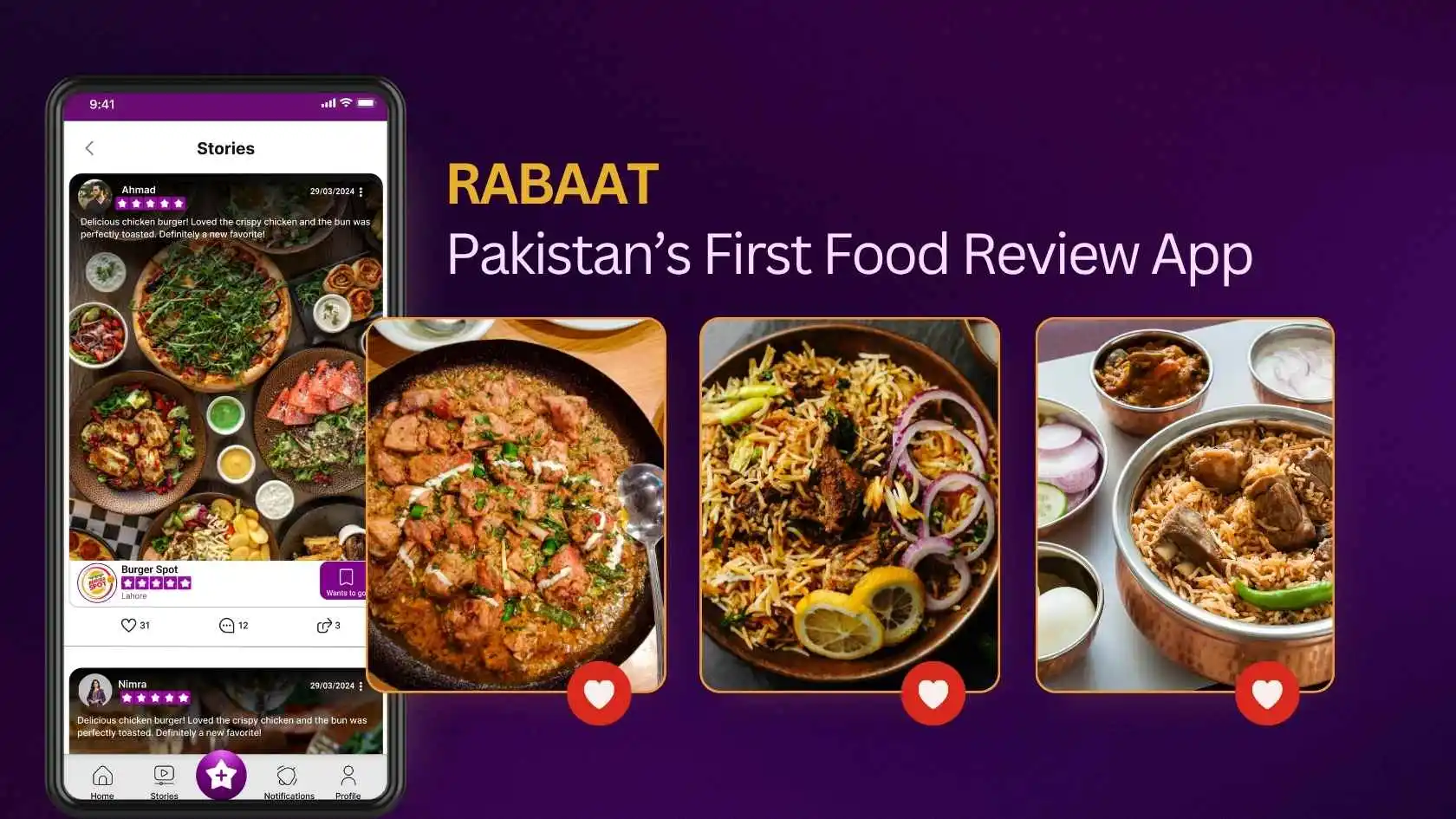
Rabaat is built specifically for Pakistan's food market. It functions as a food discovery platform, review community, and marketing channel — in one place.
Key features:
- Free restaurant listing with no commission on dine-in visits
- A food review community focused entirely on Pakistani cuisines
- An influencer network that connects restaurants with local food creators
- A rewards and redemption system that keeps customers coming back
- Editorial content through the Rabaat blog covering food culture across Pakistan
Honest limitation: Rabaat is newer than Google and Foodpanda, which means its user base is still growing. But for restaurant owners who want organic, food-specific visibility — especially in Lahore, Karachi, and Islamabad — it offers something the bigger platforms don't: a community that genuinely cares about Pakistani food
Quick Comparison Table
| Platform | Free Listing | Food-Specific | Dine-in Focus | Pakistani Cuisine Focus | Influencer Network |
|---|---|---|---|---|---|
| Google Reviews | ☑️ | ❌ | ☑️ | ❌ | ❌ |
| Foodpanda | ❌(Commission) | Partial | ❌ | Partial | ❌ |
| Zomato | Partial | ☑️ | ☑️ | Limited | ❌ |
| Rabaat | ☑️ | ☑️ | ☑️ | ☑️ | ☑️ |
What Pakistani Cuisine Is Most Popular on Food Review Platforms?
Understanding what people search for tells you what to highlight in your restaurant profile.
When users search for traditional food from Pakistan or famous Pakistani food, the most reviewed categories are consistently:
- Biryani and Pulao — searched more than almost any other Pakistani dish
- Karahi — mutton and chicken, with strong regional variation across Lahore, Peshawar, and Karachi
- Nihari and Haleem — particularly popular in winter months and for weekend breakfast
- BBQ and Tikka — anchored by the famous food streets of Lahore (Gawalmandi, Fort Road, MM Alam Road)
- Street food and chaat — a massive category especially in Lahore and Karachi
- Desserts — from classic gulab jamun and kheer to modern fusion dessert cafes
If your restaurant specialises in any of these, say so clearly in your listing description. These are the exact terms customers search before deciding where to eat.
Want a deeper guide on what makes Pakistani food culturally significant? Our article on famous food of Pakistan covers regional dishes, food history, and why certain foods dominate the review landscape.
Is Lahore Still Pakistan's Food Capital?
Short answer: yes — but it's complicated.
Lahore has an almost mythological reputation when it comes to food. The city's food streets — particularly Gawalmandi, Fort Road, and the MM Alam Road strip — offer a range that's hard to match anywhere in the country. Street food in Lahore ranges from a Rs. 100 aloo chaat to slow-cooked nihari that's been simmering since the night before.
But the food scene in Lahore is changing rapidly. You'll now find specialty coffee shops, Korean-Pakistani fusion restaurants, and high-end tasting menus sitting next to 40-year-old biryani joints. Lahore's food map in 2025 looks nothing like it did in 2015.
Karachi, meanwhile, has its own fierce food identity — particularly for seafood, Bohri cuisine, and street snacks. Islamabad's dining scene has matured significantly, with a growing number of upscale restaurants and international cuisine options.
For restaurant owners: being visible on food platforms matters most in Lahore right now, simply because that's where online food discovery is most active. For food lovers, the city still rewards exploration — our guide to hidden restaurants in Pakistan is a good starting point for finding places that haven't gone mainstream yet.
How to List Your Restaurant on Rabaat — Step by Step
The registration process is free and takes around 15 minutes.
Step 1 — Visit the Restaurant Partner Page
Go to rabaat.com/restaurant-partner . This is the dedicated sign-up page for restaurant owners and food businesses.
Step 2 — Enter Your Restaurant Details
Fill in your restaurant name, city, full address, contact number, and cuisine type. Write a short, honest description of what you serve and what makes your place worth visiting. Avoid vague phrases — be specific.
Step 3 — Upload Photos and Menu
This step has the biggest impact on clicks. Restaurants with clear, well-lit food photos consistently attract more profile visits. Upload images of your best dishes, your dining space, and your most popular items. If you have a menu, upload it in full.
Step 4 — Submit and Get Approved
Once submitted, your profile goes through a basic review before going live. After approval, customers can find you, rate you, and leave reviews — all of which improve your visibility over time.
Step 5 — Actively Collect Reviews
Encourage satisfied customers to leave reviews on your Rabaat profile. A restaurant with 50 genuine reviews will always rank higher in food searches than one with none — regardless of how good the food actually is.
How Do Food Reviews Actually Help a Restaurant's Online Visibility?
This is something most restaurant owners underestimate.
Every review a customer writes contains natural language — real words describing real experiences. When a customer writes "the best karahi in Lahore, tender meat and smoky flavour — worth every rupee", that review becomes indexed content. Search engines and AI platforms surface it when other users search for similar terms.
This is why the quality of your reviews matters as much as the quantity.
The best food reviews tend to include:
- Specific dish names and descriptions
- Context (occasion, time of visit, group size)
- Honest assessments of value, service, and ambiance
- Comparisons to similar restaurants
As a restaurant owner, you can't write your own reviews — but you can create the kind of experience that makes people want to write them. Our food review guide for Pakistani food lovers explains what makes a review genuinely useful and how reviewers are increasingly shaping where people eat.
Can Food Influencers Help Your Restaurant Grow in Pakistan?
Yes — and the evidence from markets like India and the UAE (which mirror Pakistan's digital growth trajectory) is clear: food content creators drive real foot traffic.
A single honest review from a trusted food influencer can reach tens of thousands of followers in a day. For a new restaurant or one trying to break into a competitive market like Lahore's dining scene, that kind of exposure takes months to build organically.
Rabaat's influencer programme connects restaurants with local Pakistani food creators. This isn't paid advertising — it's community-based discovery. Influencers visit, eat, and share their honest experience. For restaurant owners, the ROI on one good review can outperform weeks of social media posting.
This model is particularly effective for fast food spots, street food vendors, and restaurants with strong visual dishes — where a single photo or short video tells the whole story.
How to Write a Good Food Review — A Quick Guide
If you're a food lover who wants to contribute useful reviews, here's what separates a helpful review from a useless one.
Be specific, not generic. "Good food" tells nobody anything. "The mutton karahi had a deep, smoky flavour and the naan was fresh and slightly charred — arrived hot after 10 minutes" tells people exactly what to expect.
Cover the full experience. Food quality matters most, but mention service speed, cleanliness, pricing, and whether the experience matched what was advertised.
Use descriptive language honestly. Words like aromatic, tender, rich, balanced, crispy, or fresh help readers picture the dish. Words like "amazing" or "best ever" without context don't.
Mention the occasion. A restaurant that's perfect for a family dinner might be overwhelming for a solo lunch. Context helps other readers make better decisions.
For a complete breakdown of food review writing, including vocabulary and structure, see our full guide to writing food reviews in Pakistan.
FAQ — Restaurant Listings and Food Reviews in Pakistan
Is listing a restaurant on Rabaat really free?
Yes. As of 2025, Rabaat offers free registration for restaurants at rabaat.com/restaurant-partner . There are no listing fees or commissions on dine-in customers. Revenue features (like promoted listings) may exist separately, but basic visibility is free.
How is Rabaat different from Google Reviews for restaurants in Pakistan?
Google Reviews is broader and affects local SEO directly. Rabaat is food-specific — it's built for Pakistani cuisine, has a food-focused reviewer community, and offers features like influencer connections and a customer rewards system. Ideally, a restaurant should be active on both.
What types of restaurants benefit most from food review platforms?
Dine-in restaurants, street food stalls, cafes, and local eateries benefit most. Delivery-only kitchens are better served by Foodpanda or similar platforms. Restaurants with distinctive food, strong visuals, or a loyal local following tend to accumulate reviews faster.
How many reviews does a restaurant need before it starts ranking well?
There's no fixed number, but restaurants with 20+ genuine reviews generally appear more prominently in food searches than those with fewer. Consistency matters more than volume — a steady flow of new reviews signals an active, relevant restaurant.
Can customers earn rewards for leaving reviews on Rabaat?
Yes. Rabaat has a redemption and rewards programme where customers earn points through their activity on the platform. This incentivises genuine review-writing and repeat engagement.
Which city in Pakistan has the most active food review community?
Lahore currently has the highest volume of restaurant listings and food reviews in Pakistan, driven by its dense restaurant ecosystem and food culture. Karachi and Islamabad are growing rapidly, with Karachi particularly active for street food and seafood categories.
Where can I find hidden or underrated restaurants in Pakistan?
Our guide to hidden restaurants in Pakistan covers lesser-known spots that don't show up in typical "best of" lists. Also worth browsing: the top food review websites in 2026 for a broader picture of where Pakistanis are finding restaurant recommendations.
Conclusion — Why Online Visibility Matters More Than Ever for Pakistani Restaurants
Pakistan's food market is one of the most vibrant in South Asia. The cuisine is diverse, the food culture is deep, and the appetite for discovering new restaurants — whether through apps, social media, or food influencers — is growing every year.
For restaurant owners, the question isn't whether to be online. It's where to be online, and how to build a profile that actually converts searchers into customers.
A free listing on Rabaat is one part of that. A complete Google Business Profile is another. And a stream of genuine, detailed customer reviews is what ties it all together.
If you're a food lover, the same platforms that help restaurants get discovered also help you find better meals — more honest, more specific, and more locally relevant than a generic Google search.
Start with what's free. Build from there.
Looking to explore more of Pakistan's food scene? Browse restaurant guides, food culture articles, and city-by-city recommendations on the Rabaat blog .